Ozempic Face: What It Is and How to Fix It

GLP-1 medications like Ozempic, Wegovy, and Mounjaro have helped millions of patients lose significant weight. But as the before-and-after photos have multiplied, so has a pattern many patients weren’t warned about: dramatic facial aging that appears alongside the weight loss.

Patients and physicians have started calling it “Ozempic face.” If you have been reading about hair loss associated with Ozempic, facial aging is the other side of the same coin: rapid changes to your appearance that no one warned you about before you started the medication.

If you have lost a meaningful amount of weight on a GLP-1 medication and your face looks drawn, hollowed, or older than it did before — you are not imagining it, and you are not alone. This is a predictable consequence of rapid fat loss in the face, and it is treatable.

Below we explain what causes it, what treatment options exist, and why the physician you choose matters.


What Is Ozempic Face?

Ozempic face refers to the gaunt, prematurely aged facial appearance that can develop during or after significant weight loss on GLP-1 medications. It is not caused by the drug itself acting on facial tissue — it is a consequence of rapid fat loss throughout the body, including in the face.

Facial fat is not just padding. It provides structural volume that keeps the face looking youthful, full, and supported. When that volume is lost quickly — as often happens with tirzepatide or semaglutide — the result is a face that looks deflated rather than refreshed:

  • Hollowed cheeks and temples
  • Deepened nasolabial folds (the lines from nose to mouth)
  • Sagging skin at the jowls and jawline
  • Sunken appearance around the eyes
  • An overall appearance of accelerated aging

The cruel irony is that patients who have worked hard to improve their health through weight loss often find that their face tells a different story than their body.


Why It Happens

The face loses fat in the same way the rest of the body does during weight loss — the body cannot selectively preserve facial volume while shedding elsewhere. When weight loss is rapid, as it often is in the first several months of GLP-1 treatment, the face can lose significant volume before the skin has time to adapt.

The result is skin that no longer has the structural support underneath it that it once did. In younger patients with good skin elasticity, mild volume loss may be barely noticeable. In older patients, or those who lose weight quickly or in large amounts, the effect can be striking.

This is not a sign that something went wrong with your treatment. It is simply the face responding to the same physiologic changes occurring throughout your body.


Can You Prevent Ozempic Face?

To some degree, yes — though complete prevention is not always possible for patients who lose significant weight.

Slowing the rate of weight loss can reduce severity. Patients who lose weight gradually give their skin more time to adapt to underlying volume changes. Maintaining adequate protein intake supports skin quality and elasticity. Sun protection and a consistent skincare routine help preserve skin’s structural resilience. Working with a physician who understands the full range of injectable and minimally invasive options can help manage early volume loss before it becomes severe.

For patients who have already experienced noticeable facial volume loss, prevention is no longer the question — treatment is.


Treatment Options for Ozempic Face

The right treatment depends on the degree of volume loss and skin laxity. Not every patient needs surgery. Most cases exist on a spectrum, and the appropriate starting point varies by individual.

Dermal Fillers (Mild to Moderate Volume Loss)

For patients with mild to moderate hollowing, sunken cheeks, deflated temples, or deepened folds, dermal fillers are often the first and most appropriate treatment. Hyaluronic acid fillers can restore volume to targeted areas, softening the drawn appearance and re-establishing facial contour without surgery.

Fillers are a low-commitment starting point. Results are immediate, require minimal downtime, and are reversible. For many patients who have experienced moderate Ozempic face, a thoughtful filler treatment plan produces a significant improvement.

The key is precise placement by a physician who understands facial anatomy in depth. Filler placed incorrectly, or in excess, can make the face look puffy or unnatural rather than restored. This is an area where the difference between a physician injector and a medspa injector is meaningful. For a deeper look at how fillers work in the midface specifically, see Everything You’ve Ever Wanted to Know About Cheek Fillers.

Fat Grafting (Moderate to Significant Volume Loss)

For patients with more significant volume loss, fat grafting offers a longer-lasting solution. The patient’s own fat is harvested from another area of the body — typically the abdomen or flanks — processed, and precisely injected into the face to restore volume.

Because the transferred fat is the patient’s own tissue, results can be long-lasting and natural-looking. Fat grafting is more involved than filler and involves a recovery period, but for the right patient it offers a degree of restoration that fillers alone cannot achieve.

Facelift (Significant Volume Loss with Skin Laxity)

For patients who have lost substantial facial volume and also have significant skin laxity, loose skin at the jowls, jawline, and neck, a facelift may be the most appropriate solution. No amount of filler or fat grafting addresses loose, inelastic skin. A facelift repositions and tightens the underlying tissue and removes excess skin, producing a rejuvenated result that non-surgical treatments cannot replicate.

This is not the right starting point for every Ozempic face patient — most patients begin with fillers. But for patients with significant changes, particularly those in their 50s or 60s who have lost 30 or more pounds, a surgical consultation is worth having.


Why a Facial Plastic Surgeon — Not a Medspa

Ozempic face has become a marketing opportunity for medspas, weight loss clinics, and general injectors of every credential level. Many of them are promoting filler treatments as the answer for every patient, regardless of severity or anatomy.

The problem is that volume loss from GLP-1 weight loss is often complex. It is not always simply a matter of adding filler. In some patients, skin laxity is the dominant issue and filler will not adequately address it. In others, the volume loss pattern requires a detailed understanding of facial fat compartments and how they age. The wrong approach — too much filler, wrongly placed, in a patient who actually needs skin tightening — produces an unnatural result that can be difficult to correct.

Dr. Jesse E. Smith is a dual board-certified facial plastic and reconstructive surgeon who operates exclusively on the face. Every procedure he performs — from injectables to facelift — involves the same anatomy he has trained on for his entire career. He does not perform body procedures. He does not split his clinical attention across specialties. His evaluation of your face is the evaluation of a specialist, not a generalist.

That distinction matters when the treatment decision is nuanced.


Ozempic Face Consultations in Fort Worth and Colleyville

If you are in the Fort Worth or Colleyville area and concerned about facial changes from Ozempic, Wegovy, Mounjaro, or another GLP-1 medication, Dr. Smith offers consultations at both locations.

A consultation with Dr. Smith is an honest conversation about what you are seeing, what is driving it, and what options are appropriate for your specific situation — not a sales pitch for a predetermined treatment.

We serve patients from Fort Worth, Colleyville, and the broader DFW area.

Schedule a consultation


Key Takeaways

  • Ozempic face is a common, predictable consequence of rapid facial fat loss during GLP-1 weight loss — not a sign something went wrong
  • The degree of change varies by patient; treatment should be matched to severity
  • Dermal fillers are the appropriate starting point for mild to moderate cases
  • Fat grafting offers longer-lasting restoration for more significant volume loss
  • Facelift is appropriate for patients with significant skin laxity that fillers cannot address
  • Treatment decisions in this area require physician-level facial anatomy expertise — not all injectors are equal
  • Dr. Smith consults at Fort Worth and Colleyville, serving patients from across DFW

Jesse E. Smith, MD, FACS

Facial Plastic and Reconstructive Surgery

Otolaryngology-Head and Neck Surgery

Fort Worth and Colleyville, Texas

“Tech Neck” Injectable Treatment

By Dr. Jesse E. Smith, MD, FACS
Facial Plastic Surgeon

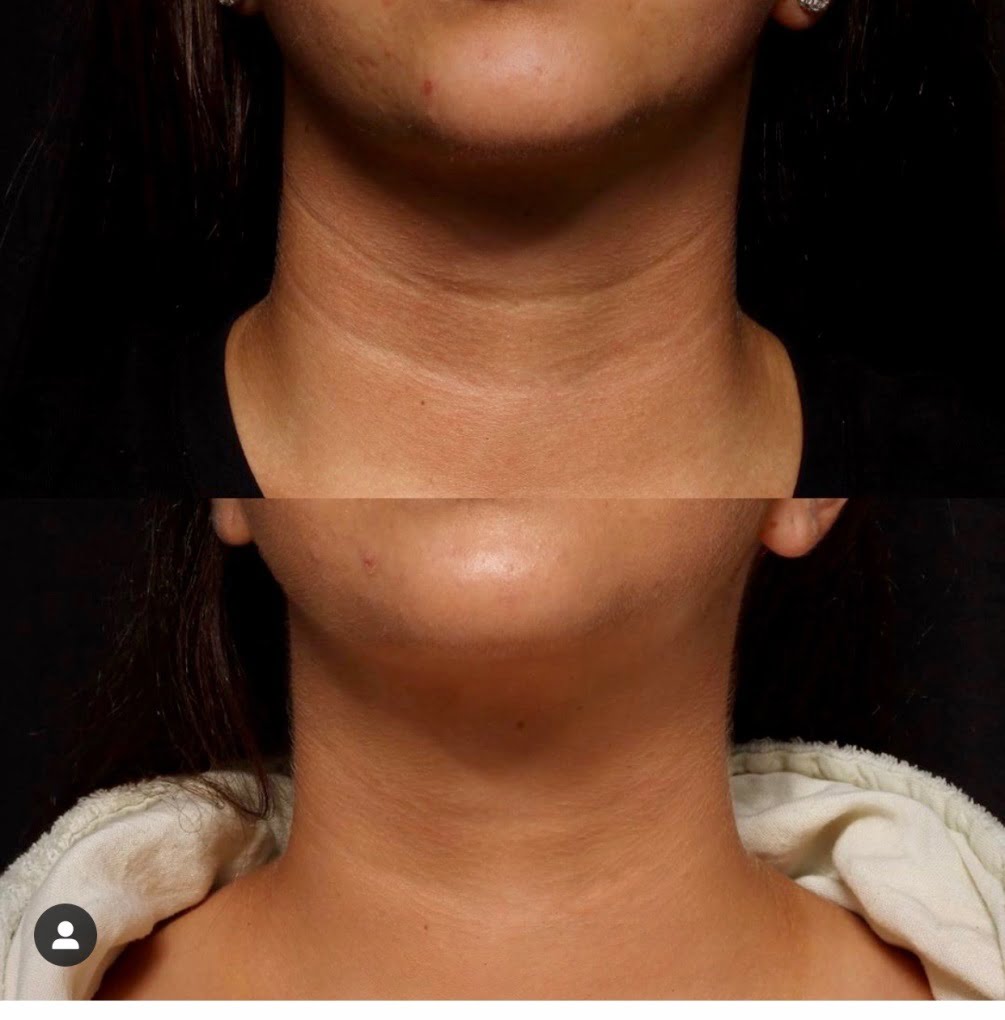
We have this thing we call Tech Neck. It’s from people doing this all day [mimes looking down at phone].

We get two or three horizontal lines across the neck here. And what we’ve just done is a combination of Volbella and Skinvive mixed one to one together. This is super soft and tends to just make tissue hydrated and it kind of blends with Volbella, so it’s really soft in the neck.

And we’ve just injected this Tech Neck. You’ll see just a little bit of fullness or a row that’ll go down within 24 hours. But these lines are now softer and diminished tilt your head down and then back up again, and then down again. And usually the swelling goes away within 24 to 48 hours. It works great.

The Evolution and Impact of Botox: From Medical Use to Cosmetic Trend

By Dr. Jesse E. Smith, MD, FACS
Facial Plastic Surgeon

How did Botox become a cosmetic treatment?

So Dr Alastair Carruthers, who recently died, was a dermatologist and his wife was actually an ophthalmologist. And ophthalmologists are eye doctors. She had a number of patients who had blepharosplasm, which is where the eye muscle contracts quite a bit and it actually does it throughout the day and it’s quite bothersome. And then also strabismus, which is where people can get a little bit of a lazy eye.

They started using Botox in those in the early 1980s in some clinical trials. And by mid to late 1980s, they really started to notice that the crow’s feet and some of the brows really started to dissipate with wrinkles for patients who were treated even three to six months.

Jean told her husband, Alastair, he was a dermatologist, that this was going on, so he started using Botox in some patients, off label, and trying to soften their lines around their eyes. And by 2002 It had enough clinical trials to become not only approved in the 1980s for non cosmetic use, which is blepharospasm and the strabismus, but then went on to become cosmetic use.

That really revolutionized the non invasive procedures that would start to perform even in every plastic surgeon’s office, but also in dermatology oculoplastic surgery, across the board. And it opened the gateway for minimally invasive procedures. It opened the gateway for all of our volumizing injectables.

It’s just really turned the table from everything is surgery to now we have other options that are less invasive.

Now Botox has over 100 medical patents, so we use it in beauty for certain, but it can be used in hyperhidrosis, which is excess sweating of palms and hands and armpits. Overactive urinary bladder. We use it to increase blood flow to, in plastic surgery, to flaps and reconstructive areas. Migraine headaches. Dystonia for children that have chronic muscle spasms that pull their head or their body into certain patterns, for relief of those. And that’s just a few to mention. There’s over 100 medical patents. Pretty amazing stuff. And we use it actually in burn patients to release scar tissue because it actually remodels scar tissue into a better type of skin.

On the cosmetic side, what is trending right now?

There for a while Nefertiti lift was a big deal. It was basically named after Queen Nefertiti, who was known to have a long, beautiful neck. The idea was that people would put Botox along the platysma muscle, which is this muscle that moves the neck.

And the thought was that muscle was actually moving the face down a bit. And by paralyzing it, it would actually lead to a little bit of lift. It was okay, successful in younger patients and the right patient population. Certainly didn’t work in everyone, which is true for all things in cosmetic surgery.

And we did find it somewhat useful for some of the platysmal bands. And that Nefertiti lift then evolved into injecting the platysmal bands, these muscle bands. And that was actually more successful than the Nefertiti lift itself, but it was a social media craze for a while.

We now also have the lip flip. And lip flip also has its advantages and disadvantages. For people who use straws or chronic pursers of their lip. We tend to get these vertical lines around the lip and so we inject those with small units of Botox and that can relax those out. The lip flip itself is best done in younger patients who tend to purse a little bit and when they purse, their lip rolls under and so we put just a little Botox, two or three units along each side and that then allows the lip to roll back up and over.

I would say that it’s not effective as a filler, but if for people who are looking just to do a little bit of something and to get a soft but a natural result, if they’re young enough and have the right anatomy, it’s a home run.

What about the Botox “freeze face”?

Botox is an individual sort of thing that we do. Everybody has different facial movements and motions. Some people force their lips, some people wrinkle their chin.

I’m a frowner, when I think. Botox is used selectively in areas. And when we put Botox in, we have the option of how much we put in. How many units do we use? And the amount that we put in equals not only the duration, but also the effect that we get. So if someone wants more movement in their forehead then we can lightly sprinkle these lines up here so we still get surprise and elevation and friendly looks.

But we don’t have to get the wrinkle down, “I’m mad,” so we would put more here to decrease the frown and leave this slightly done, so that we don’t get wrinkles here, but we still have movement. That’s the art of it. You don’t have to, it’s not a light switch. It’s not all or nothing. Yes, you can get a frozen look if somebody puts too much in the wrong place.

But it can be artful and beautiful and natural if someone who knows what they’re doing is doing it. And looking at the anatomy and treating the anatomy and the person instead of just everybody’s the same.

Is Botox permanent?

So Botox is not permanent and that can be a good and a bad thing. So if you have an injection that you do and it was permanent and you really liked it, that’d be great. However, if someone did a Botox injection on you and you didn’t really like the job, at least it’s not permanent. Botox lasts about three to four months. It can stretch to six in some people. And like I’ve said before, dose equals duration. So if we increase your dosage, then you will get a longer duration out of it. Unfortunately, it’s not permanent. But it can last a long time.

And if it’s done right, it should last at least three months. People do, in some cases, start to see it wear off at about the tenth week, and those tend to be our very active people athletes and very expressionist people like a lot of our folks that do plays and are actors and singers.

Is Botox toxic or dangerous?

So Botox is toxic, is not dangerous. I always joke with my patients that have asked me this question that I figured it out. It would take about eight vials, 800 units of Botox placed in your veins to kill you. And I always joke with them, I was like, there are a lot cheaper ways to die.

Even if we get a little bit mistakenly into a vein or artery, it is not lethal whatsoever. We’re using such small dosages in the muscles and putting them in such precise locations that this doesn’t get spread throughout the rest of the body. It stays where we place it, and that’s what we want.

So we place it in the muscle belly, in the precise location.

Do you only need Botox when wrinkles are deep?

This is a great question and also a bit of a myth. We actually prefer to start seeing patients when their wrinkles occur. When we see patients that come in with deep wrinkles, Botox is actually a little bit more disappointing to them because they’ve already had these wrinkles form over years and now we’re trying to undo years of, these deep lines.

Can it be done? Absolutely. But people are a little disappointed to hear that it might take 12 to 18 months of Botox instead of 3 to 6 months of Botox to fix their problem. So we do like to see people when they first start to occur or have had them for about a year or so.

It’s a lot easier to fix in that situation. Again, it’s an ounce of prevention, pound of cure.

Is Botox addictive?

Botox has no addictive substances whatsoever in it. It is not a drug that is considered an addictive substance. People are addicted to it because they look good if it’s done well, and for that reason, most people want to keep up Botox on a fairly consistent basis, especially if they have a great result with it.

Which goes back to the other question of if I stop my Botox, I look worse than when I started. That’s one of my other favorite. And we take pictures for every client that comes in, and I love to show patients their pictures after they’ve been on Botox and their, before the patients came in, their very first picture with us.

People get used to how they look, especially after three to six months of looking great with, a few fine lines and wrinkles, and then when they stop and go back to where they were, they think they look worse, but they look exactly the same as when they came in.

Is Botox painful?

Botox is not especially painful. I wish that we could walk it in without a needle, but we can’t. In my clinic, we use the smallest, thinnest needle that there is. We buy them special from TSK. They’re made in Japan. They’re really sharp, fine needle. So it hurts about as little as it possibly can for a little needle stick.

We rarely have any patients complain about the pain of the needle sticks. It’s not especially painful. It’s not like any pain medicine or any special treatment to get Botox for.

Does Botox work immediately?

Botox does not work immediately. It would be great if it did. I think that’s one of the things I’d change about it. What has to happen is the Botox molecule actually has to get into the nerve that’s supplying the muscle and stop the transmission of this neurotransmitter that jumps across the nerve to make the muscle move.

That takes about 3 days to start to happen. So I always tell my patients, listen, you’re not going to get out to your car and instantly have results. Please don’t come back in and say you didn’t get your money’s worth. Give it three days. Three days it’s going to start to work. Two weeks is the maximum effect.

And then it will slowly wear off over the course of about three to four months.

Is Botox just for women?

Botox is not just for women. We have a large clientele of women just because they like to come in and look good, but we also have a fairly large clientele of men. I’ve been doing my own Botox since I was about 32 years old because, as I mentioned earlier, when I think, I get the frown lines. I got actually tired of people asking me, are you mad?

And I was like, no, I’m just trying to think. So it takes a lot of effort to think. So we have a large clientele of men that come in for Botox that just want to look better, look refreshed. And as men, especially in me, we get a very heavy brow. And then when we wrinkle and frown, or, this comes down, it looks even heavier.

And so we look a little bit more mad or mean than what we intend to be. Plus we do squint a lot. We get a fine crow’s feet. It works great for that. It’s soft. It can look good. You can still have expression and not have deep lines.

Does Botox continue to work as effectively over time?

A lot of people have the question, does Botox continue to work as effectively over time? And it actually does. There’s very few people that have become immune to Botox. We’re sticklers at my clinic to, we’re like, you cannot have your Botox unless you’ve not had it in 10 to 12 weeks.

We don’t want to give small doses, in frequent intervals. That’s basically giving somebody allergy immunotherapy and you can become immune to it. When I trained in LA we had several people that used to go around and they’d go to lunch and they’d notice a line and then they’d come in and get that little bit injected and so they’re getting small doses in frequent intervals and then it got to be where we couldn’t even dump a five gallon bucket of Botox on them and you know nothing would work and so that was very unfortunate.

I was glad that I saw it while I was there, so we’re very regimented with our patients about, it’s got to be 10 to 12 weeks from your last treatment. If you’re going to get it done, get it all done at once. It’s very effective over time, especially if it works for you. And what I like to do is use the analogy of we’re going to put your arm in a cast.

And so most people can understand this if we put your arm in a cast for six or eight weeks, when we take it out, It’s going to be way smaller than the opposite side. So we’ve told that muscle that you can’t work for six to eight weeks. And that muscle does a thing in medicine called atrophy. It gets smaller because it’s not being used. And then the person has to build that muscle back up, and then it can get to the opposite side. We’re doing a very similar thing to the facial muscles. We’re telling them, okay, you can’t work as effectively as you used to. And while they can still move their face and it can look good, we’re telling that muscle to atrophy a little bit or to slim down a little bit and not be as effective.

If we continue that for months and months, over time for months and years, that muscle will continue to be atrophied. And so it can then begin to space people’s treatments out as much as six to nine months. between treatments because the muscle has gotten to a such a small amount that we don’t have to use as much Botox or we don’t have to do it as frequently.

Liquid Facelift: Transforming Aesthetics at Dr. Smith’s Med Spa

By Bailey Pettway
Licensed Medical Aesthetician

The liquid facelift is a revolutionary non-surgical procedure that offers a way to rejuvenate and refresh the face without the need for invasive surgery. Utilizing a combination of injectable treatments like dermal fillers and botulinum toxin, the liquid facelift can reduce wrinkles, restore volume, and enhance facial contours. At Dr. Jesse Smith’s Med Spa, we are proud to offer this innovative treatment, expertly tailored to each client’s unique needs by our skilled team, including our renowned Medical Aesthetician, Bailey Pettway, with the help of our CNA Ashley Gregory to discuss and tailor each patient’s exact needs.

Understanding the Liquid Facelift

A liquid facelift is a bespoke treatment that combines various injectables to achieve a youthful and revitalized appearance. Dermal fillers such as JUVÉDERM®, Restylane®, and Sculptra® are used to add volume and smooth out wrinkles, while botulinum toxin products like Botox® and Dysport® help relax facial muscles, reducing the appearance of fine lines. This personalized approach allows for a comprehensive facial rejuvenation, targeting areas such as the cheeks, jawline, lips, and forehead.

The Benefits of a Liquid Facelift

One of the key advantages of a liquid facelift is its minimal downtime compared to traditional facelift surgery. Patients can often return to their daily activities shortly after the procedure, making it an ideal choice for those seeking significant aesthetic improvements without the recovery time. Additionally, the results are temporary and adjustable, offering flexibility for patients to refine their look over time.

Ideal Candidates for a Liquid Facelift

The liquid facelift is suitable for individuals looking to address signs of aging without undergoing surgery. Ideal candidates are those experiencing volume loss, fine lines, and wrinkles, but who still have relatively elastic skin.

The Procedure

Administering a liquid facelift requires precision and artistry. The process is relatively quick, taking about an hour, and involves minimal discomfort. Clients are advised on aftercare to ensure optimal healing and results.

Conclusion

The liquid facelift represents a cutting-edge solution for facial rejuvenation, offering a blend of immediacy, efficacy, and minimal invasiveness. At Dr. Smith’s Med Spa, we are committed to providing our clients with the highest standard of care, utilizing the latest advancements in aesthetic medicine to achieve beautiful, natural-looking results.

Ready to explore how a liquid facelift can rejuvenate your appearance? Contact Dr. Smith’s Med Spa today to schedule your consultation and discover the transformative potential of this innovative treatment.

All About Skin Rejuvenation with Radiesse

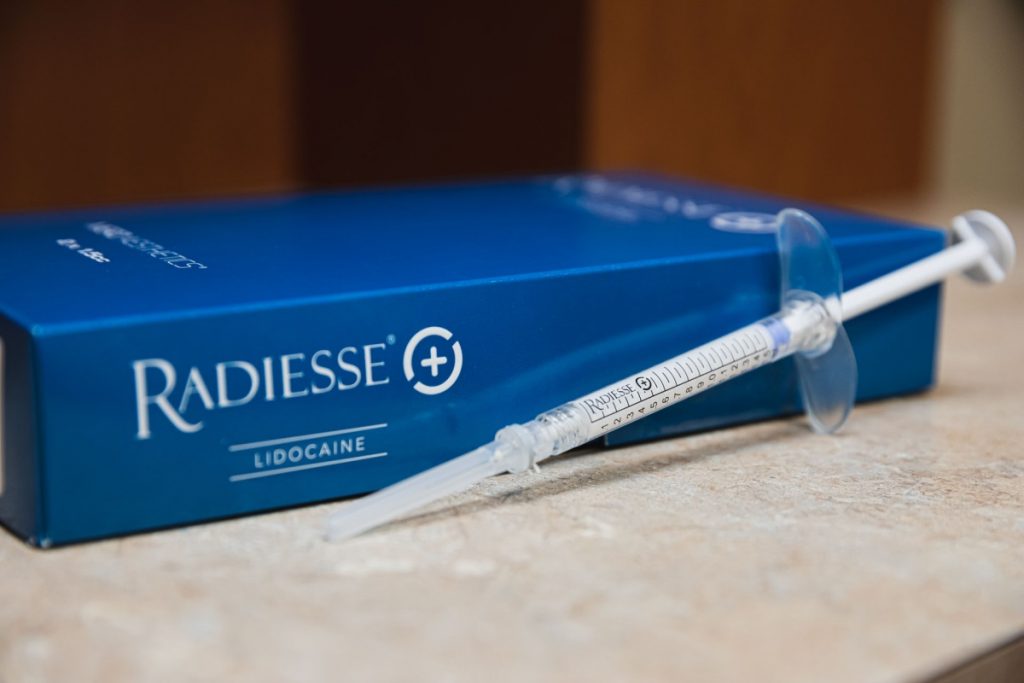
Got wrinkles, fine lines, skin laxity, thinning skin, or neck lines? Then you may be a candidate for skin rejuvenation treatment with Dilute or Hyperdilute Radiesse!

What is Radiesse?

Radiesse was approved by the FDA as a facial filler at the end of 2006 and has been used as a volumizing filler since. Radiesse consists of calcium hydroxyapatite (CaHA) microspheres suspended in an aqueous polysaccharide gel carrier. Once it is injected, the gel is absorbed over time. The body then metabolizes the CaHA microspheres, which stimulate the body to produce collagen.

In recent years, the use of Radiesse in a dilute or hyperdiluted form has increased. In this form, it is a biostimulatory agent, and a volumizing filler, and it improves skin quality, texture, tone and firmness. It can be used in the face, neck, décolletage and other areas of the body. This technique was first used in Europe, yet it is now being used more and more in the U.S.

What is Hyperdiluted Radiesse?

Hyperdiluted Radiesse is simply Radiesse that has been diluted / thinned out, with a mixture of sterile saline solution and lidocaine. This makes it an easily spreadable biostimulator capable of remodeling skin over a larger area.

When this diluted mixture is injected into areas of collagen loss, it triggers the body to produce new collagen and elastin. The result is a skin rejuvenating treatment with pronounced and visible smoother, firmer, younger-looking skin.

The benefits of this treatment are skin tightening and thickening, reducing the appearance of fine lines, wrinkles, and crepiness. Treatment of the décolletage will also reduce the pigment from sun damage. Overall, skin tone, texture and elasticity are markedly improved.

Where can it be used?

  • Mid and lower face
  • Neck lines and/or neck in patients with mild to moderate laxity
  • Décolletage
  • Buttocks with cellulitic dimples (in patients with moderate to severe cellulite) to reduce the appearance of dimpling
  • Above knees to address the knee lines from lax skin with aging
  • Top of hands for a more youthful appearance

How much diluted Radiesse is needed?

Radiesse is available by the syringe, and, according to the current practice guidelines, treatment typically requires one or more syringes per area. The face, neck, and chest each usually require one or two 1.5cc syringes per session.

What is the downtime?

As with any filler injection, there can be some bruising, swelling and mild discomfort after the treatment. Most clients tolerated this treatment well and are very satisfied with their results.

There can be a variable amount of bruising and swelling, which normally lasts up to a week. We recommend Bromelain and Arnica, natural herbal supplements, to minimize these issues that may occur.

How many treatments are needed?

One to three treatment sessions are usually required to achieve the desired aesthetic effects. Two treatments are typical, though severe sun damage or severe skin laxity may require more.

These treatments are spaced out one month apart. Though preliminary research shows that results with hyperdiluted Radiesse may last up to two years, one will likely want to have one hyperdilute Radiesse treatment every 12 to 18 months for maintenance.

Combination therapy

Hyperdiluted Radiesse can be used alone. Yet when addressing areas with harder to treat concerns, such as the neck or chest, it is best to treat in combination with other tightening and resurfacing procedures, such as Chemical Peels or SkinPen microneedling, because they work in harmony to improve dermal collagen.

Lip Filler vs. Lip Flip – Which Is Right for You?

Years ago, there was a huge stigma around aesthetic treatments like Lip Fillers. Today things have changed. Young patients are taking advantage of the benefits of Lip Fillers and Lip Flips to improve the appearance of their lips.

Full lips are a common desire for many. Both Lip Fillers and the Lip Flip create the appearance of fuller lips. Fullness in the lips can lessen as we age. However, lip filler and lip flip are two different procedures.

What Is Lip Filler?

Lip Fillers are a dermal injection that can add volume, create a better facial silhouette, and even lessen the look of wrinkles. The most common type of filler is hyaluronic acid.

What Is a Lip Flip?

With a Lip Flip, Botox is injected just above the lip. This is different from a filler, which is injected directly into the skin of your lips. The purpose of a Lip Flip is to relax the muscle over your lip, which causes it to “flip up” a small amount: hence the name.

How Long Do Lip Fillers and Lip Flips Last?

On average, Lip Fillers often last from 10 to 18 months. However, some fillers might break down as quickly as six months while others might last an entire two years. Your mileage may vary.

For a Lip Flip, the results will often last for about three to four months. As such, this procedure needs to be done on a more frequent basis than Lip Fillers.

Reasons to Choose a Lip Flip

If you’re trying to decide between Lip Fillers and Lip Flips, there are a few situations where lip flips are considered the superior option. These include:

  • More subtle changes – No volume is added with a flip, so the lip size doesn’t experience any changes.
  • Treatment of gummy smiles – Flips can help reduce the amount of gum that shows when smiling.
  • Temporary results – While Lip Fillers are longer-lasting, a Lip Flip gives results that only last a few months.
  • Great for experimenting – Lip flips are great for seeing how you like lip aesthetics and enhancement treatments.

Why Choose Lip Fillers?

There are also reasons to choose Lip Fillers instead of Lip Flips, depending on your desires. These include:

  • Less subtle changes – Lip fillers can change the size and volume of your lips. You can go dramatic or add a little and keep a more natural look.
  • Long-term results – Lip fillers last quite a bit longer than a Lip Flip, especially when you choose a filler that can last a year or longer.

Final Thoughts

The right treatment for you will depend on what your goals are. If you are not sure, talk to a facial plastic surgeon – like Dr. Smith.

Message or call us.

Everything You’ve Ever Wanted to Know About Cheek Fillers

Are you curious about fillers for cheeks? Many people who have nearly unnoticeable or flattened cheekbones think about getting dermal fillers to enhance their cheeks.

The main purpose of this procedure is to help smooth out wrinkles and fine lines, create added volume to the face, and create the appearance of lifting your cheekbones.

What Are Cheek Fillers?

When you get cheek fillers, an injection is made that adds volume to the area near and above the cheekbones. This creates the look of additional bone structure.

When these injections are made, they also help eliminate the appearance of fine lines and wrinkles.

Several different materials can be used for cheek fillers. Polylactic acid and hyaluronic acid are the most common choices for the under-eye and cheek area. The fillers are temporary and need to be renewed after several months.

How Long Do Fillers for Cheeks Last?

Fillers can last anywhere from six months to two years. It all depends on which kind of cheek fillers you choose. Over time, the filler material will dissolve and metabolize, leaving collagen behind. Collagen is good for the skin.

Who Can Get Cheek Fillers?

If you’re healthy, do not smoke, and have no chronic health issues, you are likely a good candidate. It is not recommended that one gets cheek fillers if any of the following apply:

  • You are breastfeeding or pregnant.
  • You suffer from bleeding disorders.
  • You’re allergic to any of the compounds found in dermal fillers.

What Is It Like to Get Cheek Fillers?

First, you will have a consultation with Dr Smith about your desired results. Once that is complete, you can schedule an appointment to get the injections, and in some cases the injections can be performed that day.

In the two weeks before the procedure, it is important to avoid taking blood-thinning medication, such as aspirin.

Dr Smith may also have extra instructions for preparing you for the process. Make sure Dr Smith is aware if you take prescription blood thinners.

At the appointment, you will recline comfortably. A numbing agent or topical anesthetic may be used before the injections or will be included in the shot itself. The injection process is quick and usually takes less than 30 minutes.

After injections, some results will be immediate. However, it can take up to 48 hours for the fillers to settle in the right location. You can drive after the injections, run errands, or even go to work.

During the first few days after injections, do not sleep on your cheeks. It’s also a good idea to avoid serious exercise for about two days. Try to keep your face clean and dry and avoid touching it.

Final Thoughts

Cheek fillers are a simple procedure with results that can last for months or years. It’s important to choose a provider who is licensed and experienced to put in the dermal fillers.

As a Facial Plastic Surgeon and former National Allergan Injection Trainer, Dr. Smith brings artistry and experience to injections.

Call or message us.

History of Botox

Most people think of Botox as a cosmetic procedure. It might surprise you to learn that it was not originally introduced for use in cosmetic applications. That was a happy accident for the original practitioners using the toxin.

How did Botox become one of the most popular cosmetic procedures? Since the initial FDA (Food and Drug Administration) approval, the uses for Botox have become more varied.

Let’s learn when Botox was discovered, and how it became one of the most popular cosmetic procedures available.

The Discovery of Botox

A Belgian scientist by the name of Emile Pierre van Ermengem was the first to discover the bacteria clostridium botulinum. His discovery was made after an outbreak of botulism in the 1800s. This bacterium, known as the deadliest bacteria worldwide, is what scientists have harnessed to create the Botox used in medicinal and cosmetic applications.

First Uses of Botox

In the 1920s, scientists started attempting to isolate botulism toxin. Success was achieved approximately 20 years later. Dr. Edward Schantz is credited with isolating a crystalline form of the toxin.

In the 1970s, Alan Scott began experimenting with Botox as a treatment for the ophthalmological disorder strabismus (eye-crossing). He injected botulinum into the muscles of the eyes. His procedure worked when three surgeries had not, and Scott became known as the father of Botox.

In addition to strabismus, Botox was used to treat blepharospasm. This constant eye-twitching was corrected by injecting Botox into the eyelid. During the initial trials for FDA approval, the cosmetic indications for the drug were discovered.

Botox As A Cosmetic Treatment

During testing on monkeys in the 1980s, botulinum proved useful in smoothing the furrows between the eyebrows. The first company to produce Botox for use in cosmetic procedures was Allergan. They had bought the rights to Botox from Alan Scott in the late 1980s or early 1990s.

From the initial use as a treatment between eyebrows, Botox began to be used in other facial applications. Someone noticed that the toxin makes wrinkles and fine lines look smoother. Doctors use their clinical best judgment to determine whether Botox should be used to treat wrinkles. Since its discovery, Botox has become the most popular cosmetic procedure available for the treatment of fine lines and wrinkles.

How Botox Works

Many people think that Botox works by filling the wrinkles in the skin. However, it actually works on the muscles and neurotransmitters within the muscles. Basically, Botox blocks the reception of messages from the brain to the muscles that cause the muscle to contract and move. Blocking this movement of the muscle causes the muscle to smooth making wrinkles seem less pronounced.

Conclusion

Botox is known as a cosmetic procedure that smooths wrinkles. However, it was initially used as a treatment for ophthalmologic conditions like eye-crossing and eye twitching. Since the FDA began testing it in the late 1980s or early 1990s, many medical and cosmetic uses have been discovered for the toxin.

The Many Uses of Botox for the Face

Botox is a well-known procedure used to remove wrinkles from the face, typically in the forehead or the area around the eyes. What is not commonly known is that Botox has far more uses for the face than just helping with appearance. Here, we will talk about many of the ways Botox injections can be used to treat different conditions.

Eyelid Spasms

Botox is a neurotoxin which temporarily paralyzes nerves, and thus, stops the nerves from communicating with the muscles. With blepharospasm (eyelid spasms), an individual loses control of the basal ganglia, which controls their eye movements. This can cause droopy eyelids or uncontrollable twitching. These abnormal facial movements can be very disruptive to everyday life. Botox works by blocking the nerves from communicating with their muscles at the neuromuscular junction. In blocking receptors, the drug cuts off access to the nerves, so the muscles become paralyzed, which stops spasms.

Crossed Eyes

Botox was also initially approved for treating crossed eyes, also known as strabismus. Crossed eyes can be congenital in children or result from trauma, such as blunt force trauma to the eye area. When people have crossed eyes, they can be permanently corrected by surgery, but they may also opt to get Botox first to relax their muscles and see what the uncrossed eye will look like. Botox can also be used by people with strabismus to calm their eye muscles without having to undergo eye surgery.

Hypersalivation

Hypersalivation can be an extremely irritating condition, often negatively affecting the sufferer’s ability to live a normal day-to-day life. Fortunately, yes, Botox can actually be used to treat hypersalivation by paralyzing the nerves and stopping them from overproducing saliva.

Bell’s Palsy

An individual with Bell’s palsy suffers from one-half of their face drooping as a result of facial nerve paralysis. It can be caused when pregnant, when someone has diabetes, or when a virus has been transmitted, and with other viruses, such as Lyme disease. With recovery of the nerve, the crossed fibers can cause severe facial tics and spasms. The spasmodic facial muscles can be relaxed with Botox injections to aid recovery in Bell’s Palsy.

Spasmodic Dysphonia

Spasmodic dysphonia is characterized by the sound of shaky, strained, or hoarse vocal cords. Even though it affects the voice, it is actually classified as a neurological condition, and not a speech disorder. With spasmodic dysphonia, an individual’s speech can be affected by uncontrolled spasms caused by abnormal brain signals. Botox helps by weakening the muscles of the vocal cords so that the voice is smoother and more stable, with less strainig.

Thyroid Eye Disease

If the thyroid is overactive due to Graves’ disease or hyperthyroidism, the eyes sometimes cannot close completely. When a person has thyroid eye disease, their eyelids can often appear retracted or bulging. But, with Botox injections, the eyelid’s muscles weaken, causing the eyelids to appear more normal.

Botox is commonly known as the solution to fine lines and wrinkles. But it has so many more beneficial uses than just reducing the visible effects of aging.

Lip Flip: Everything You Want to Know

Struggling with thin lips? Worried that you’re showing too much upper gum when you smile? There’s an answer that doesn’t involve surgery – the “lip flip”. What is this procedure, how does it work, and who is the ideal patient? We’ll explore everything you need to know below.

What Is a Lip Flip?

A lip flip is a non-surgical procedure that temporarily gives you fuller lips. It relies on Botox injections and allows the inner portion of the upper lip to “flip” outward and upward, enhancing your lip’s appearance.

How Long Does It Take?

A lip flip is an in-office procedure and usually takes just 10 to 20 minutes. However, if you combine a lip flip with other procedures, your appointment may require more time.

How Does It Work?

You will receive three Botox injections – one in the “Cupid’s bow” region of your upper lip (the center), and one in each corner of the mouth. The injections relax the muscle in those spots, allowing the inner portion of the upper lip to flip, or roll, outward and make your lips look fuller.

Is There a Recovery Period?

Like most Botox procedures, there is no real recovery period with a lip flip. Once the appointment is over, you’ll be able to return to your routine immediately. Note that there may be some minor swelling immediately after the injection, but this usually resolves within a few hours or a day at the most.

Am I a Good Candidate for a Lip Flip?

Most people are good candidates for this procedure, but you are particularly well suited if you want fuller lips without going through a surgical procedure, or if you feel that your upper lip thins too much when you smile. If you feel that your smile shows too much of your upper gum, then this may also be the right treatment for you.

How Long Does It Last?

The results of a lip flip are temporary. For most patients, the effects will last up to 12 weeks. You can then have another lip flip procedure immediately afterward. If you want longer-lasting results, you might want to consider a lip lift procedure (surgery) or dermal filler injections.

What Should I Avoid?

Your doctor will advise that you avoid certain things beginning several days before your lip flip procedure. You should avoid ibuprofen and aspirin, as well as other products that thin the blood. You should also abstain from smoking, alcohol, taking multivitamins, and even fish oil.

Are There Side Effects to a Lip Flip?

The most common side effects of the procedure are slight bruising around the mouth and temporary soreness and swelling.

How Does Botox Differ from Dermal Lip Fillers?

A lip flip is a non-invasive, temporary procedure that relies on Botox to subtly plump your upper lip and create a fuller look. Note that this is only due to the relaxation of the muscles in the lips. Dermal lip fillers, on the other hand, provide a significant increase in lip volume and can last for much longer.

The Full, Beautiful Lips You Want

A lip flip could be just the procedure for you. Non-invasive and temporary, it enhances the natural curve of your upper lip and takes just a few minutes.

Interested in a lip flip?  Get in touch!